shady2grove
Jack London - The Call of the Wild Sobunkaku 1919 First ed 1st print Preface Arishima Takeo
Jack London - The Call of the Wild Sobunkaku 1919 First ed 1st print Preface Arishima Takeo
受取状況を読み込めませんでした
[PRODUCT SPECIFICATIONS]
- Author: Jack London
- Translator: Sakai Toshihiko (堆利彦)
- Preface: Arishima Takeo (有島武郎)
- Title: 野性の呼聲 (Yasei no Kosei / The Call of the Wild)
- Publisher: Sobunkaku (叢文閣), Tokyo — Ushigome-ku Kaguramachi 2-11
- Year Published: 1919 (Taisho 8) — First Edition, First Printing. Printed May 1; Published May 7, 1919.
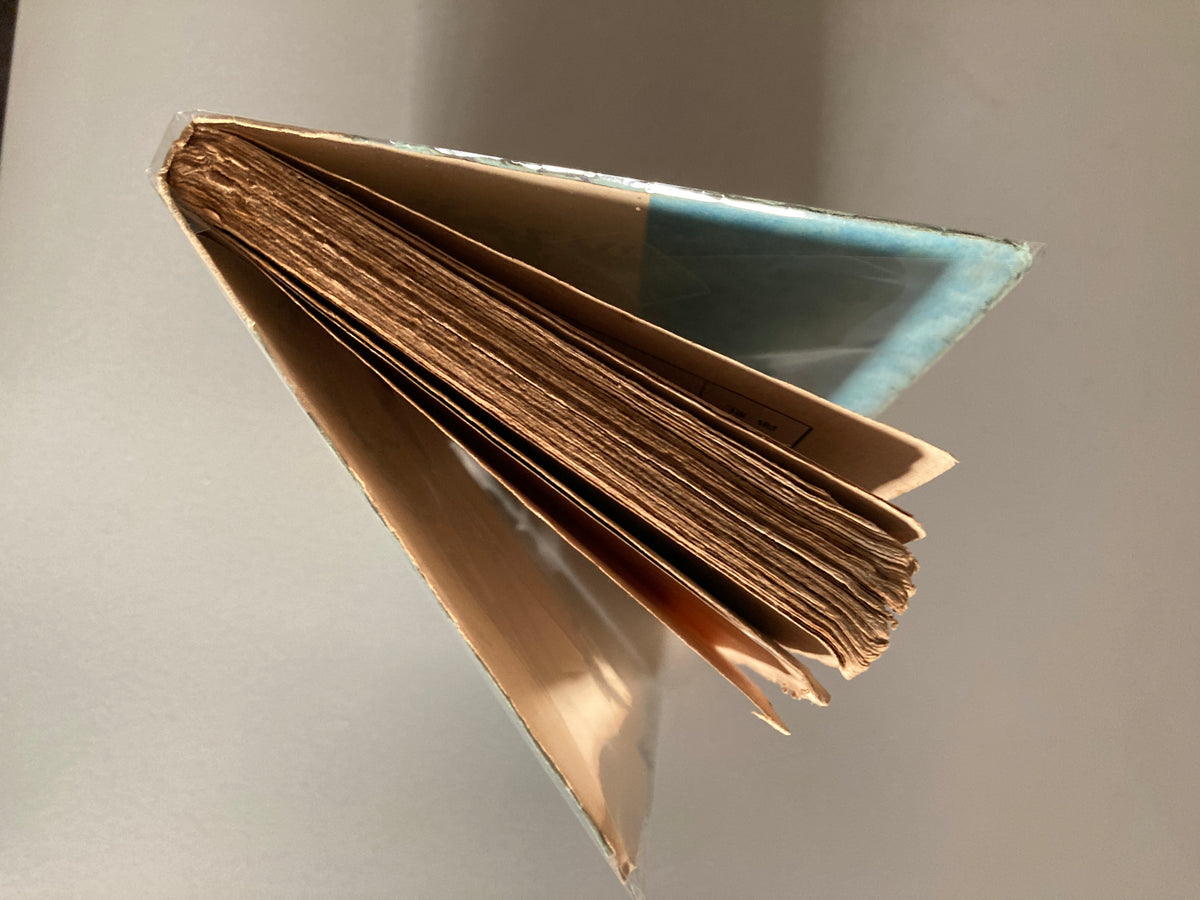
- Format: Hardcover. Blue marbled paper boards with dog-portrait medallion design (blue on blue); cream cloth spine with navy rule — original two-tone binding as issued. Illustrated endpapers (dog-sled silhouette, echoing the 1903 Macmillan first edition design). Frontispiece illustration. Preface by Arishima Takeo. 7 chapters + afterword.
- Language: Japanese
- Original Price: 80 sen (八拾錢)
[OVERVIEW]
May 1919, Tokyo. Sixteen years after Jack London’s The Call of the Wild first appeared from Macmillan in New York, Sobunkaku publishes the first Japanese translation — in a binding that makes clear the designers knew exactly what they were honoring. The illustrated endpapers — a continuous silhouette of a dog-sled team crossing a frozen landscape, printed in grey on cream stock across both front and rear pastedowns — are a direct visual homage to the iconic imagery of the 1903 Macmillan original. The cover itself — blue marbled paper boards stamped with a dog-portrait medallion in a laurel wreath, the cream cloth spine ruled in navy — is the original binding as issued. This is how the book left the publisher in 1919.
The translator is Sakai Toshihiko (堆利彦, 1870–1933) — one of the founding figures of Japanese socialism, a journalist and agitator who would go on to co-found the Japanese Communist Party. That Sakai chose to translate London — the American socialist whose fiction fused adventure, naturalism, and class consciousness — is not incidental. It is a political act dressed as a literary one. The preface is by Arishima Takeo (有島武郎, 1878–1923) — one of the central figures of the Shirakaba literary movement, a novelist of international sensibility who would, four years after this book was published, renounce his inherited estate and give it to his tenant farmers. His presence here, introducing London’s feral, freedom-seeking dog to Japanese readers, is a document of the Taisho intellectual moment at its most charged.
[IMPORTANT NOTE FOR INTERNATIONAL BUYERS: EASY AI TRANSLATION]
While the text is printed in Japanese, you can easily read and study this historic book using modern smartphone AI tools. By taking a photo of any page with your smartphone and using free apps like Google Lens, ChatGPT, or Google Translate, the embedded AI will instantly scan and translate the text on your screen layout. Language is no longer a barrier to owning and enjoying this rare piece of literary history.
[WHY THIS VOLUME IS A PRIZED COLLECTOR’S ITEM]
- First Japanese Edition, First Printing — 1919: Early twentieth-century first editions of The Call of the Wild in any language are among the most actively collected items in the market for American literature. The 1903 Macmillan original is a benchmark of rarity; copies from the first years of the novel’s international publication history are extraordinarily scarce. This 1919 Sobunkaku edition — the first printing of the first Japanese translation, 107 years old — belongs to that same early stratum of the book’s global life.
- Sakai Toshihiko & Arishima Takeo: The combination of translator and preface-writer makes this volume a document of the Taisho left-intellectual milieu at its most concentrated. Sakai Toshihiko co-founded the Japanese Communist Party; Arishima Takeo’s novels remain in print and in the curriculum. Their names on this book are not decorative — they are the book’s argument.
- Design Homage to the 1903 Original: The dog-sled silhouette endpapers are a direct visual reference to the Macmillan first edition’s iconic cover imagery — evidence that the Sobunkaku designers knew exactly what they were publishing and chose to honor it.
- Revenue Stamp Intact: The Taisho-era revenue stamp on the colophon page — required by Japanese publishing law of the period — is present and intact, confirming the book’s authenticity as a period first printing.
[CONDITION] Good (G) — Honest Wear for a 107-Year-Old First Edition
- Boards: Blue marbled paper boards with original dog-portrait medallion design. Age-toning, soiling, and wear to corners and edges — consistent with 107 years.
- Protective Cover: A transparent protective cover has been applied to preserve the binding.
- Front Flap: Missing. The front inner flap of the dust cover is absent. The rear flap is present and intact.
- Binding: Secure and intact.
- Endpapers: Dog-sled silhouette endpapers present front and rear. Strong age-toning consistent with Taisho-era paper stock.
- Interior & Pages: Age-toning throughout — natural and consistent with the period. No writing beyond the colophon revenue seal.
- Please carefully inspect all high-resolution listing photos to verify condition.
Share